Shared expenses in more than one currency
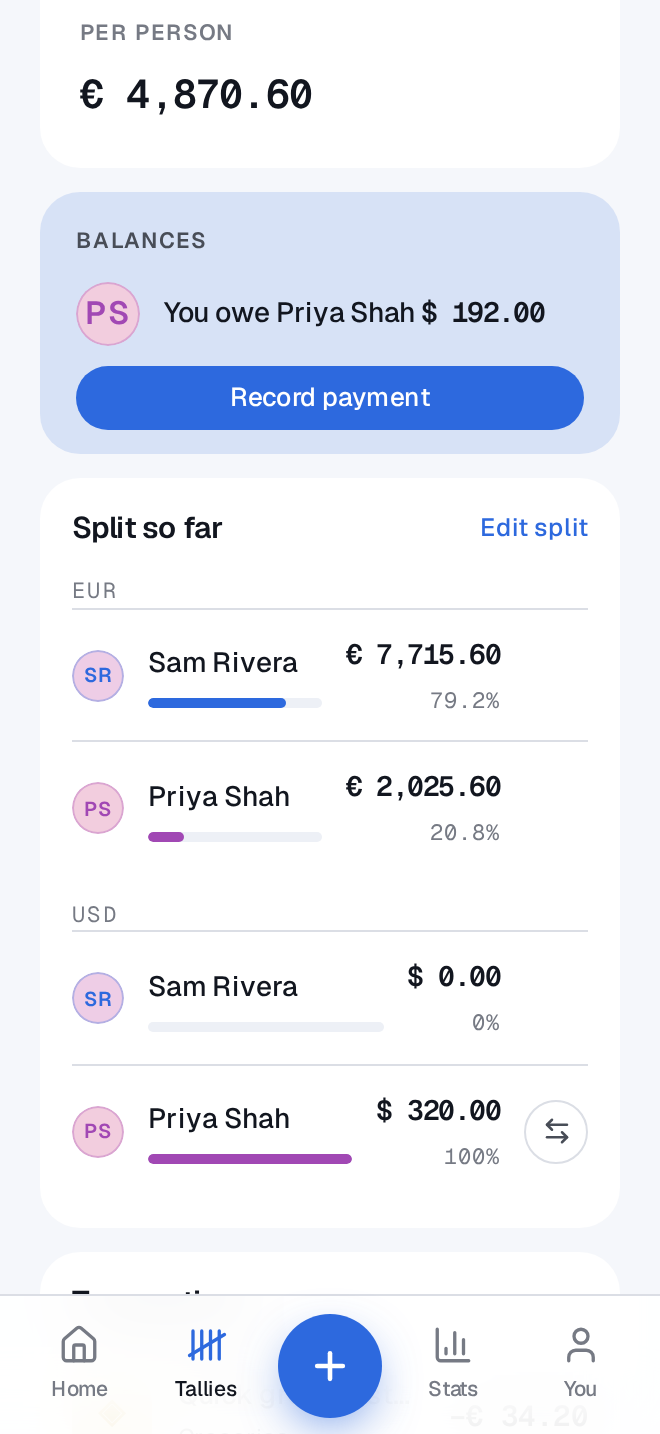
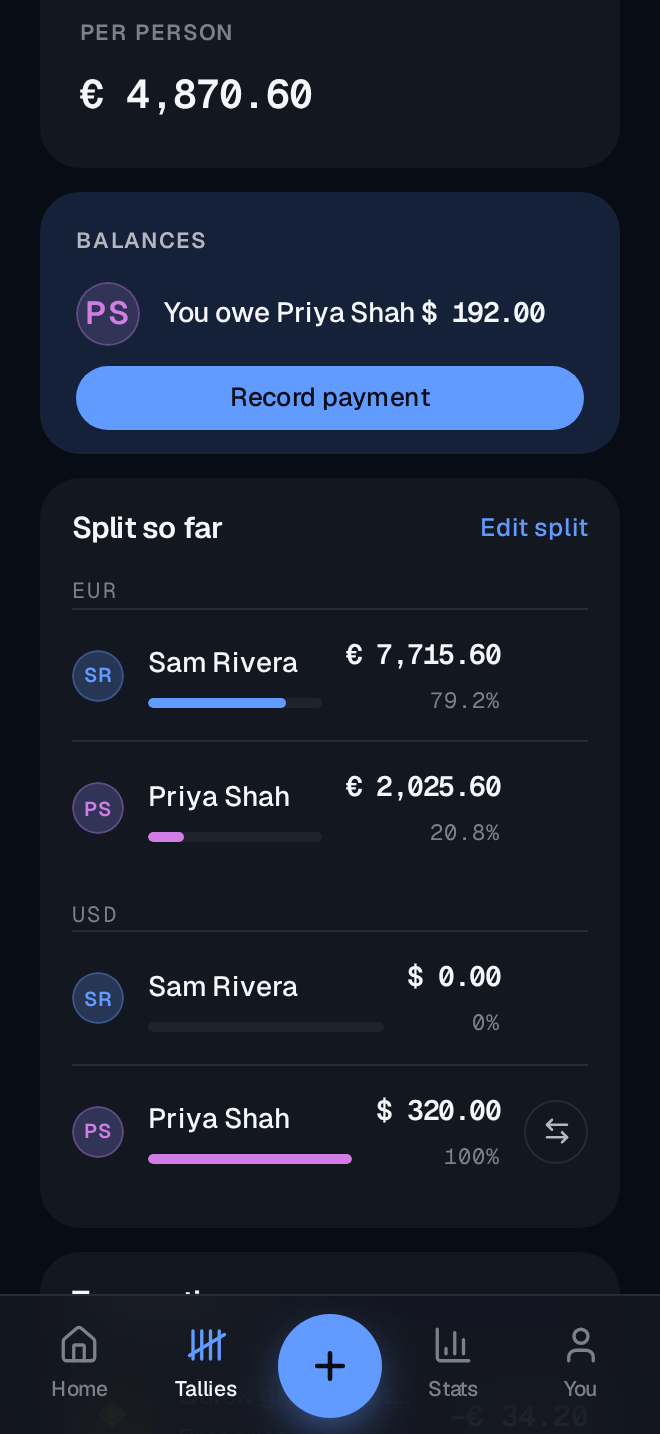
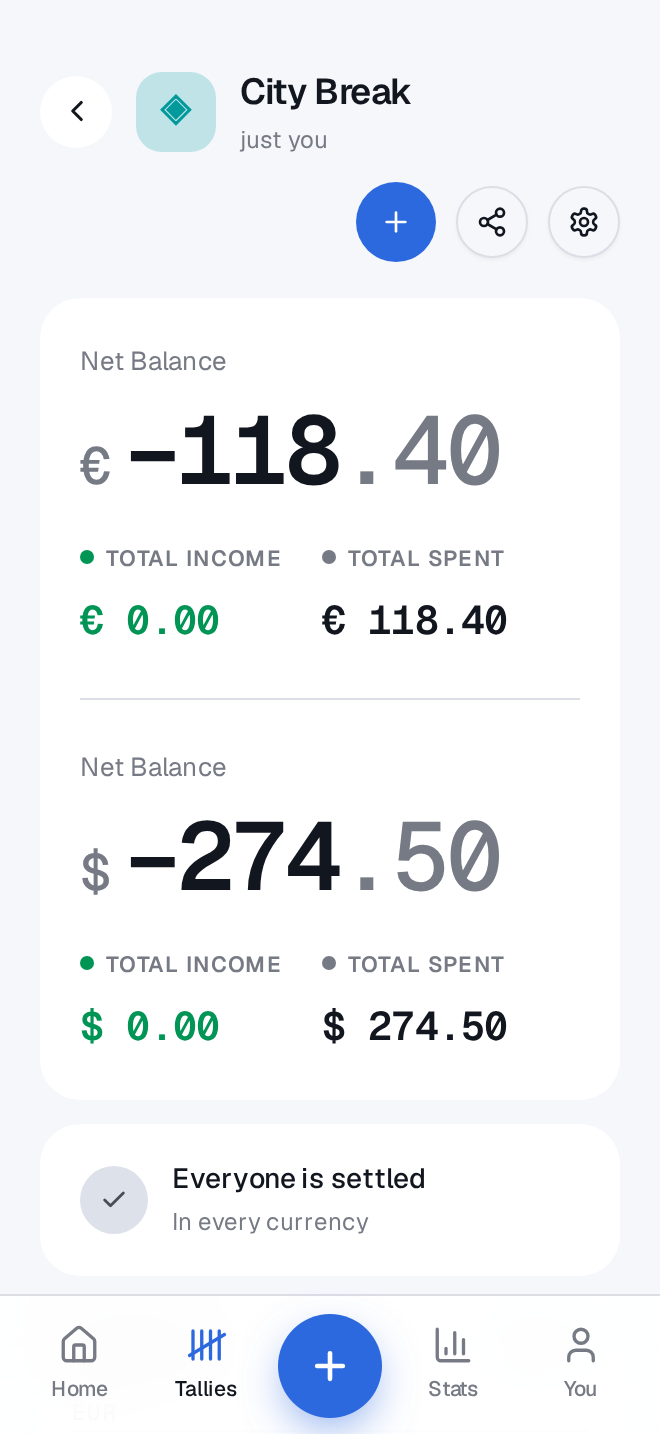
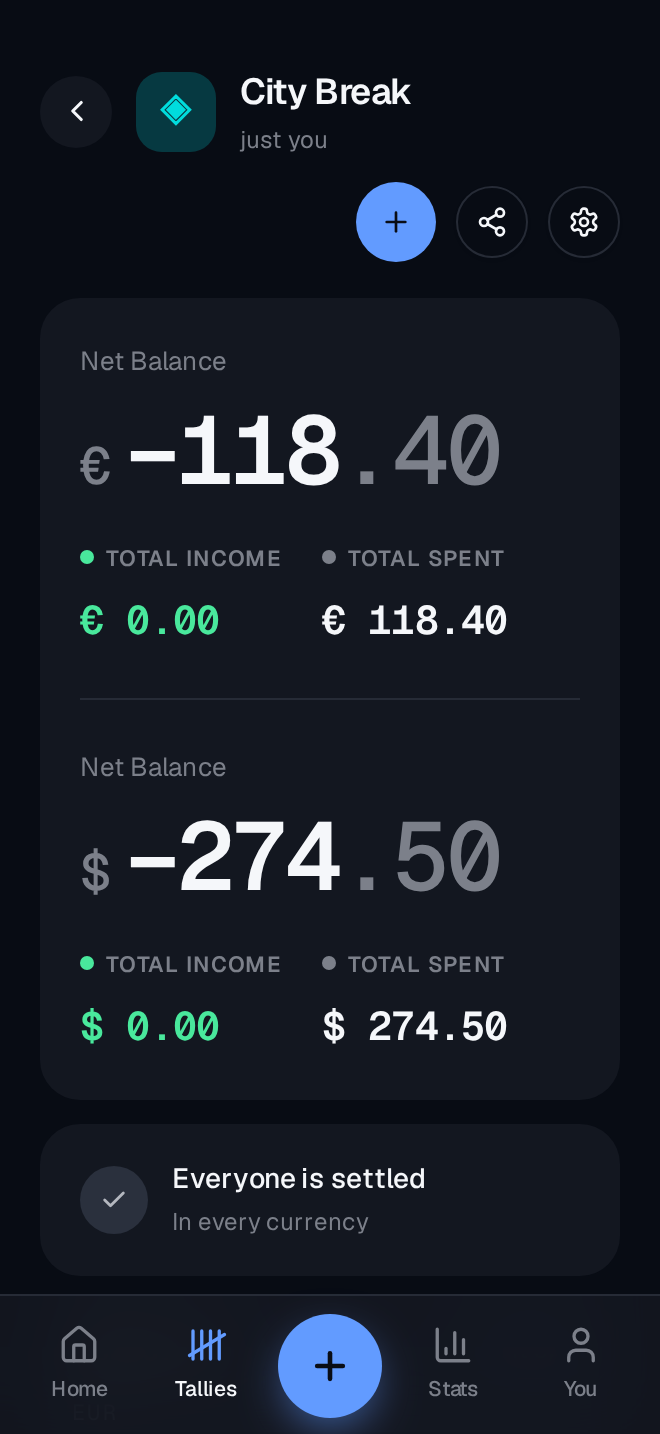
Rent in euros, a flight in dollars, a weekend in pounds. Nickstick keeps every amount in the currency you paid it in, with its own balance and its own settle-up.
Never converted, so no exchange-rate arguments
Converting every expense into one currency means picking a rate, and whichever rate you pick, someone loses a little. Nickstick does not convert. A euro expense stays in euros, a dollar expense stays in dollars, and each currency is settled on its own.
- Several currencies in the same tally
- A separate balance and settle-up per currency
- Amounts stored exactly, to the smallest unit of each currency
Who it is for
Friends who travel together, couples who live across a border, roommates from different countries, anyone who pays in one currency and gets paid back in another. If your shared costs come in more than one currency, this is the problem Nickstick was built around.
Your totals, without the mixing
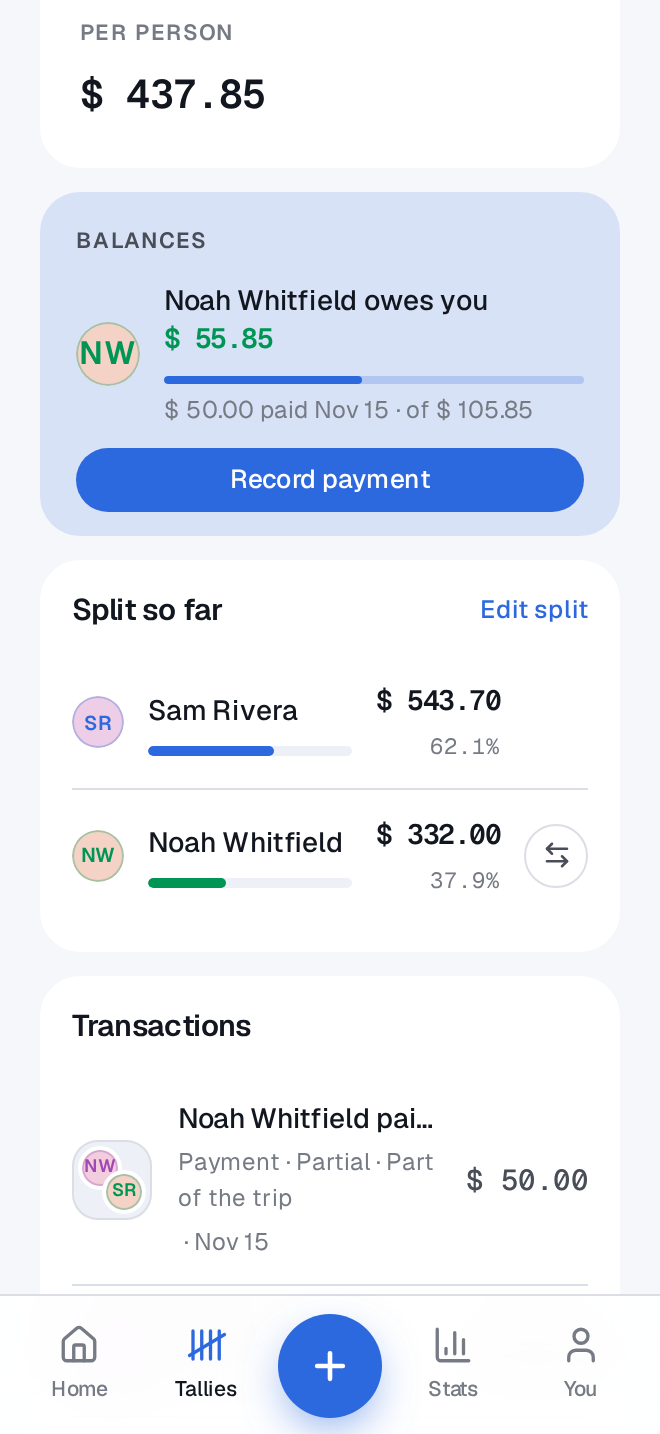
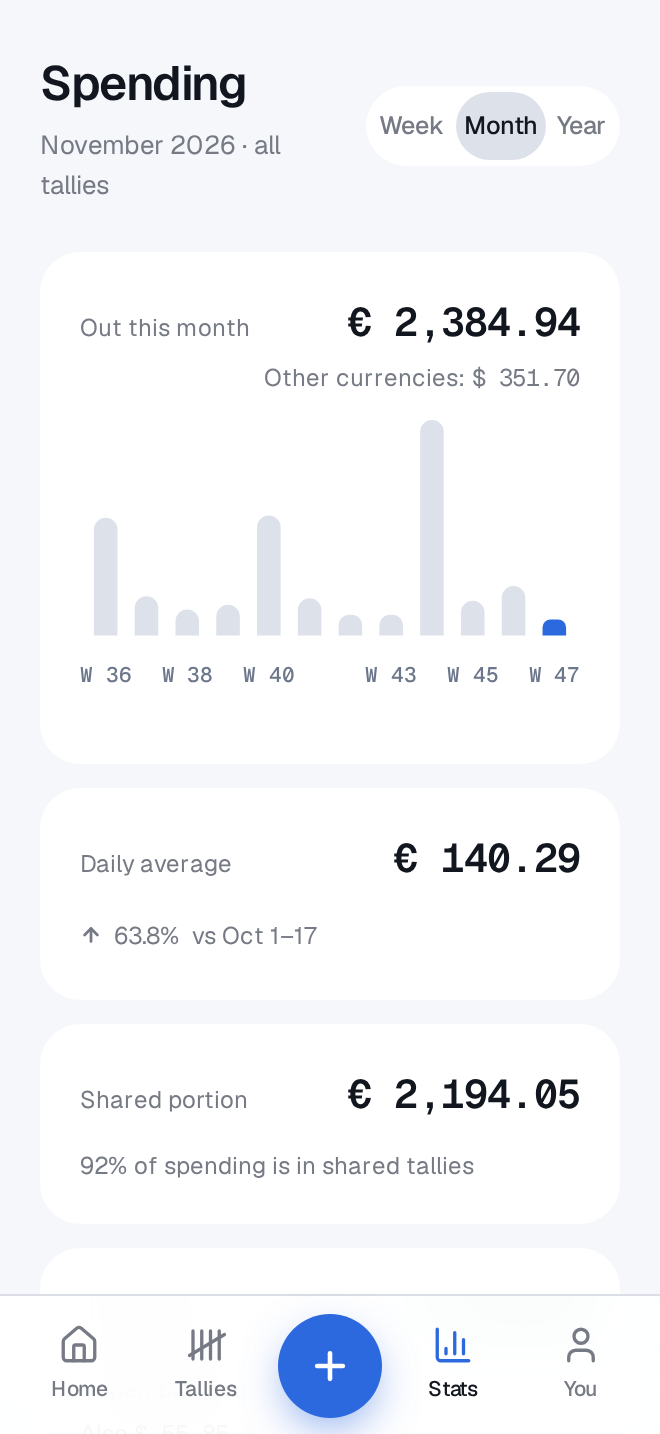
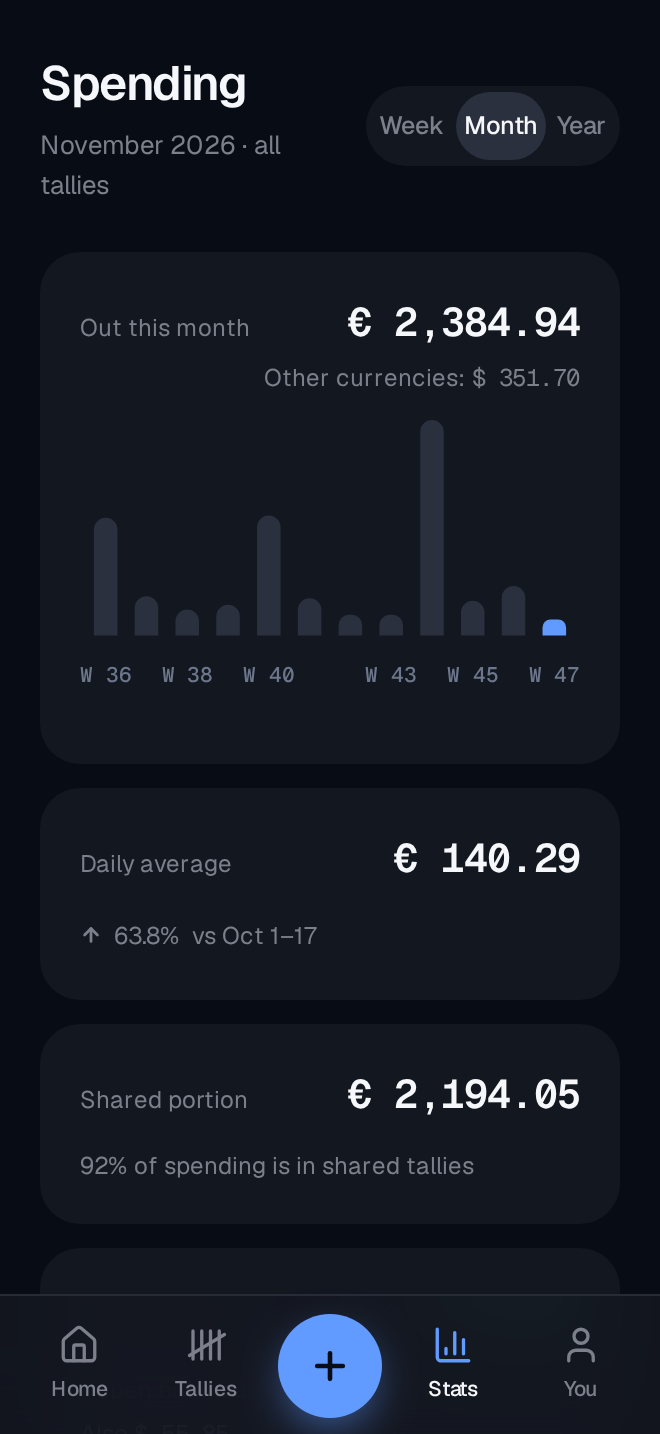
Your overview shows totals in your main currency, with a quiet line for each other currency you used. Nothing is added across currencies, so every figure is one you can check against a receipt.
How it works
Pick a default currency
Each tally has one, and you can change it per expense.
Log in the currency you paid
Type the amount exactly as it appears on the receipt.
Settle each currency
Nickstick lists who pays whom, currency by currency.
Questions and answers
Does Nickstick convert between currencies?
+–
No. Amounts in different currencies are never added together or converted. Each currency keeps its own balance.
Can one tally hold several currencies?
+–
Yes. Choose the currency on each expense; the tally shows a balance for each one used.
How are amounts stored?
+–
Exactly, to the smallest unit of each currency, so totals add up to the cent.